Aipan Art — the sacred folk art of Kumaon, painted by hand.
An art form older than memory, passed from mother to daughter.
Aipan (also called Aepan or Alpana) is the ritualistic folk art of the Kumaon Himalayas, believed to have flourished in Almora under the Chand dynasty. The name derives from Arpan — an offering. For centuries, Kumaoni women have painted these designs on thresholds, puja rooms, and temple walls during weddings, naming ceremonies, festivals, and the sacred thread ceremony, believing they invite prosperity and keep negative energy away.
Every authentic Aipan begins and ends with a bindu — a single dot representing the core of the universe, from which all patterns flow. In September 2021, Aipan received India's Geographical Indication (GI) tag, formally recognizing it as a protected heritage craft of Uttarakhand.
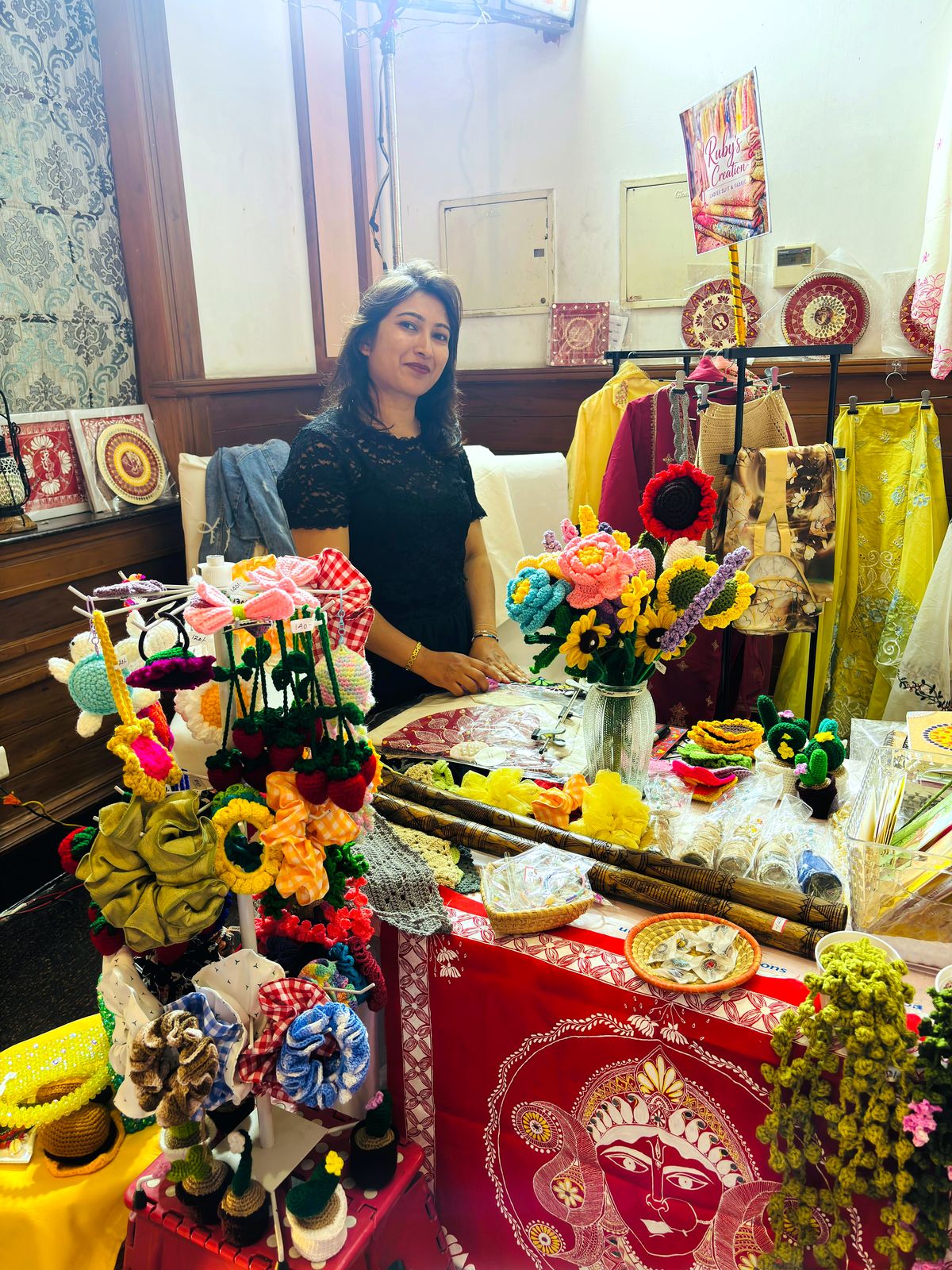
Geru, biswar, and three fingers — nothing else.
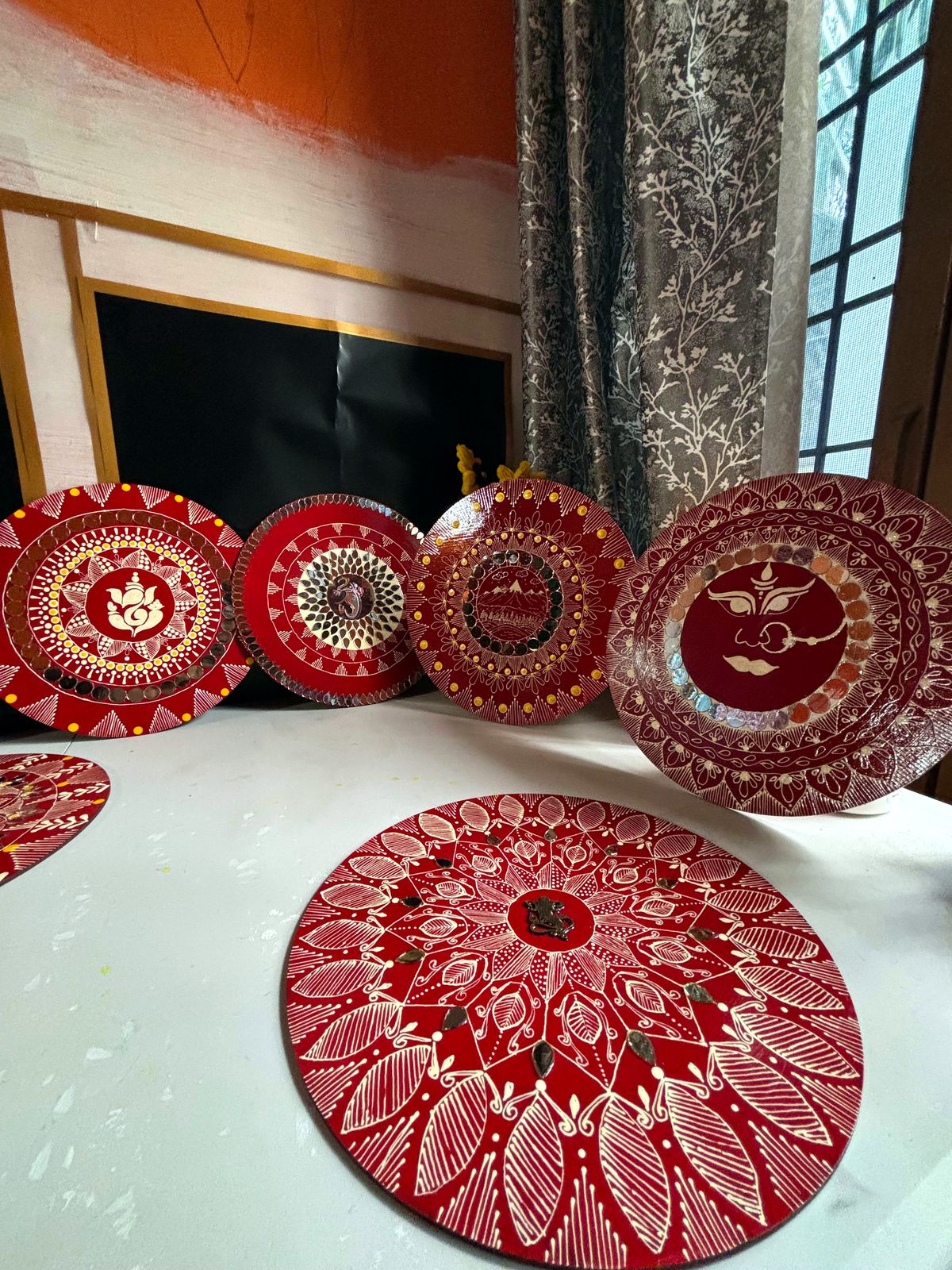
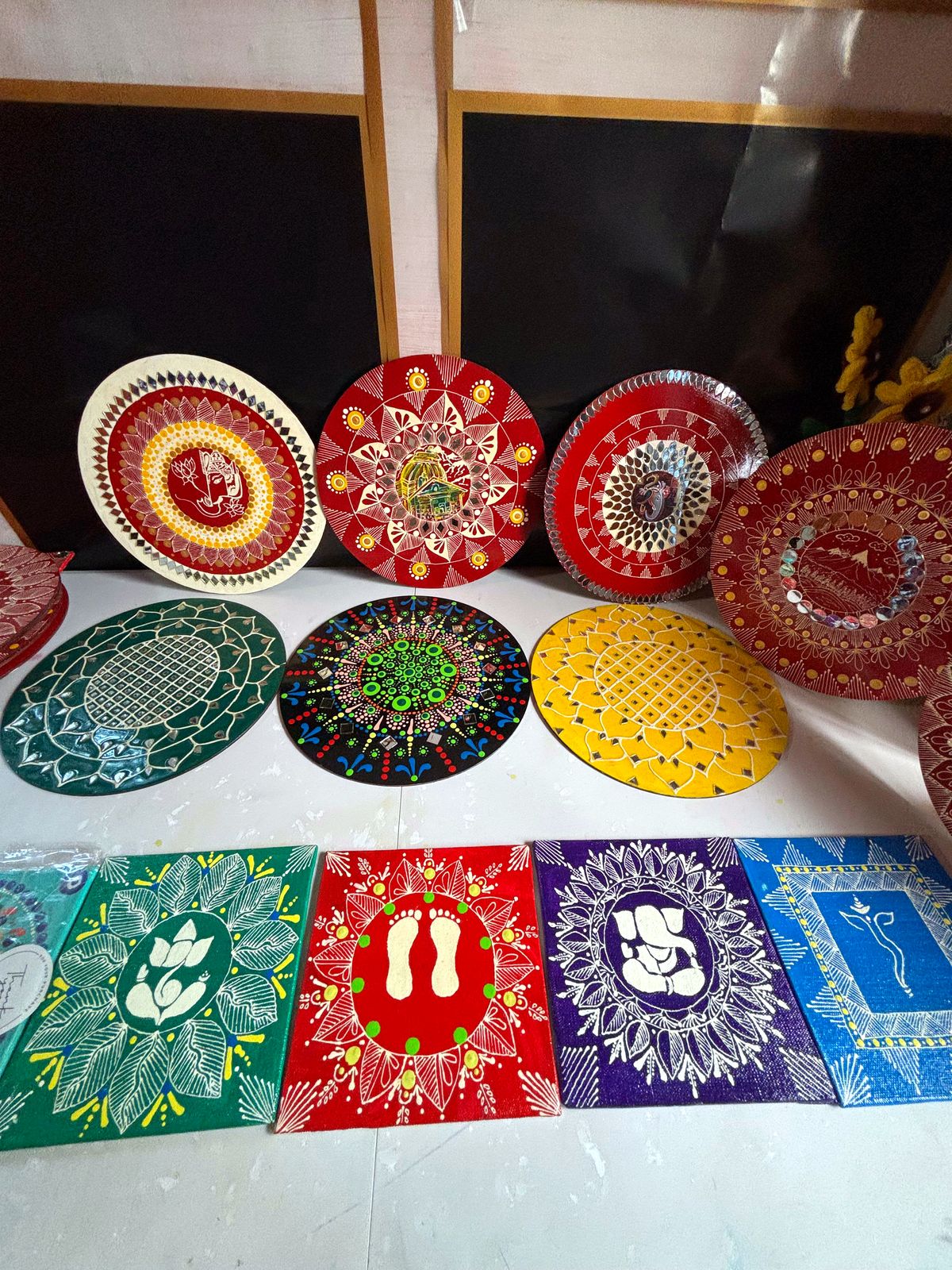
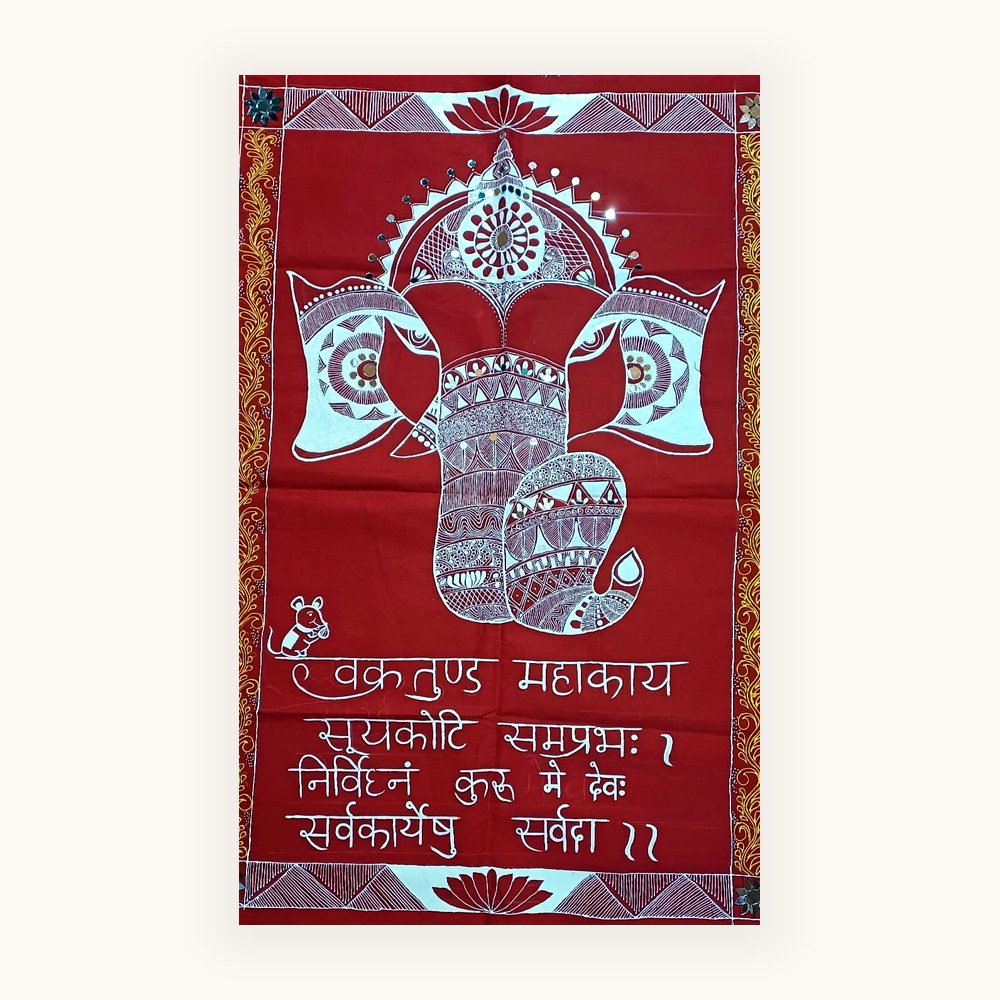
The surface is first laid with geru, a natural red-ochre clay symbolizing fortune and fertility. Designs are then drawn freehand — traditionally with the last three fingers of the right hand — using biswar, a white paste of ground rice. No stencils, no prints: motifs of Lakshmi's footprints, lotus, conch, swastik, and shatkon flow entirely from memory, which is why no two pieces are ever identical.
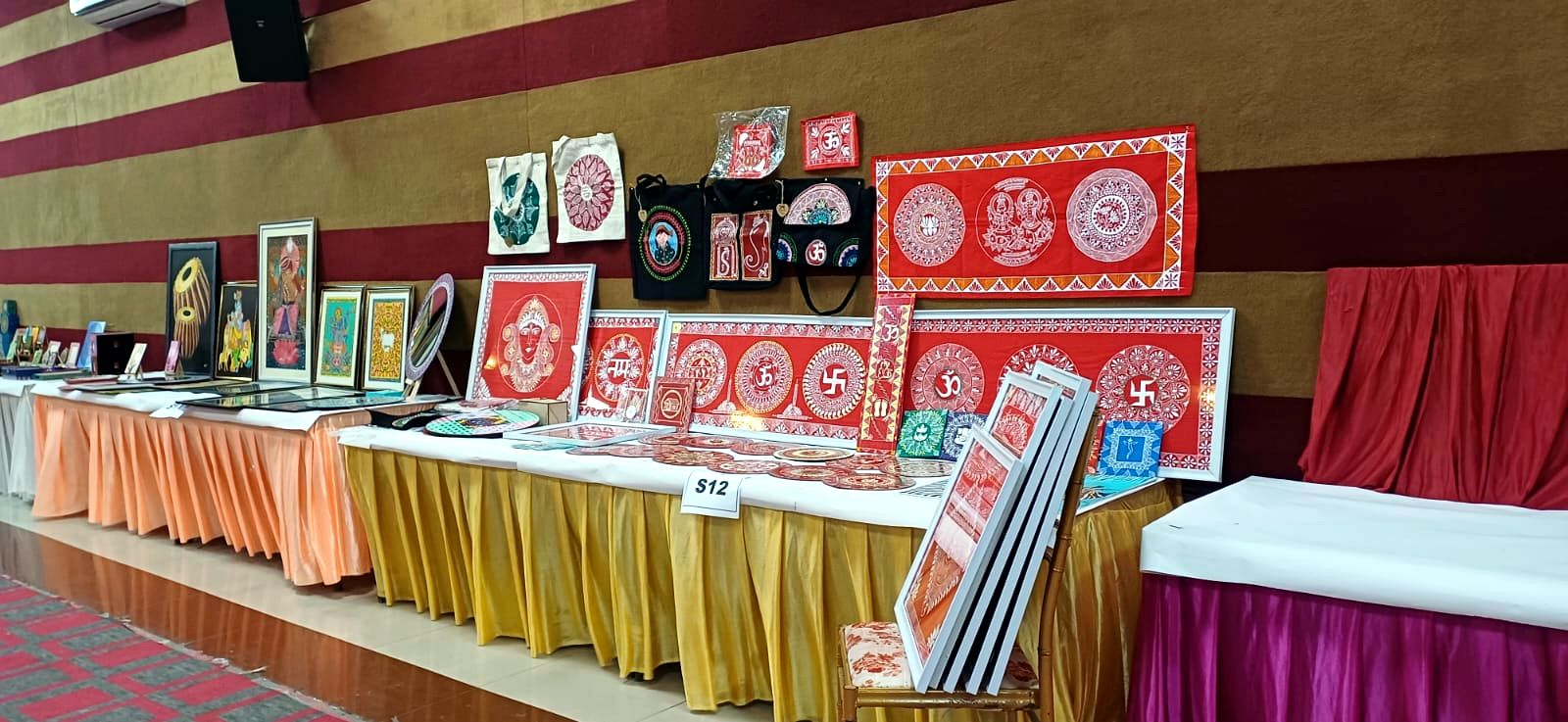
Our artisan partners carry this living tradition onto framed panels, wooden plates, canvas, and textiles — contemporary formats with completely traditional technique. Watch the process on our channel: The Aipan Artist on YouTube →
Wholesale Aipan — panels, plates, textiles & custom commissions
Minimum Order Quantity (MOQ) can be fully customized to meet specific customer requirements.
Traditional Kumaoni Mandala
A bespoke handcrafted Aipan mandala centerpiece.
MOQ: 5