Products
Where the Himalayan products come from: four short stories.
Behind every product on our list is a village, a season and a way of working that is older than any brand. These four stories explain the people and the place. Each one ends with the products it leads to.
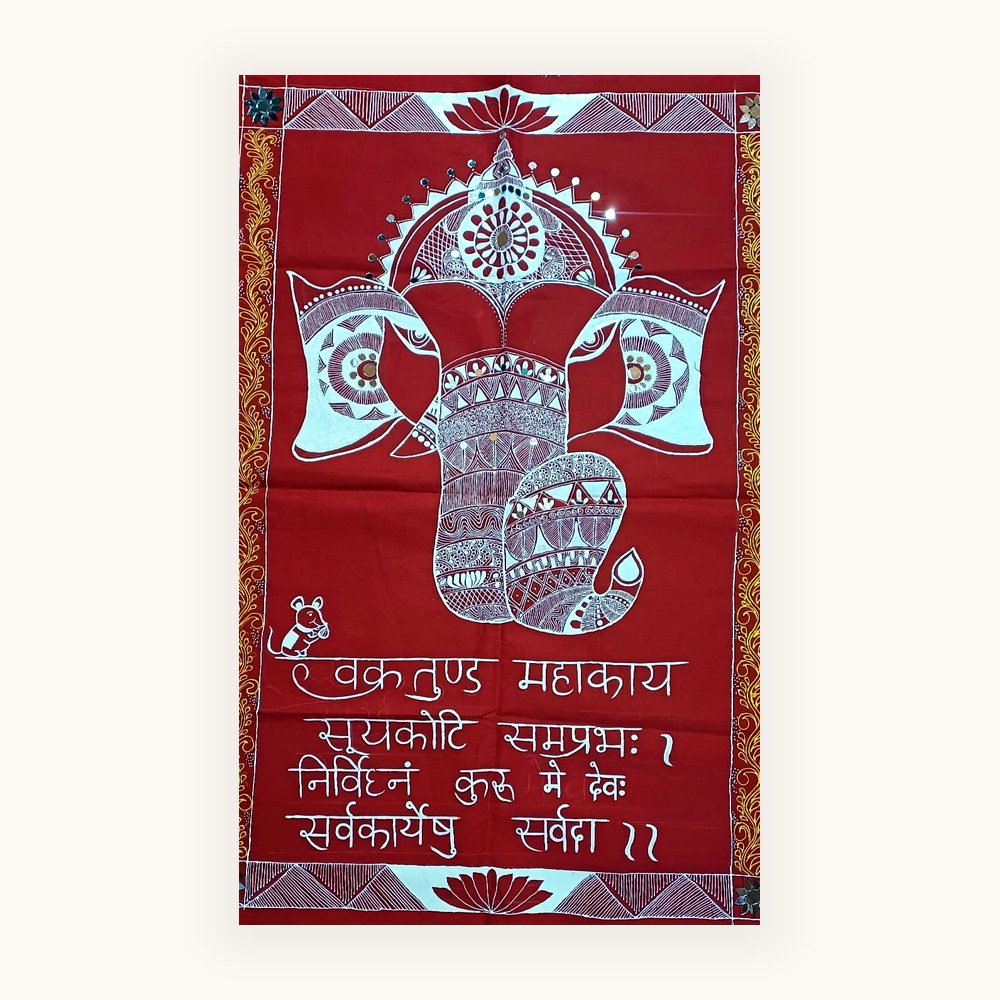
It begins with a dot.
In Kumaon, every Aipan painting starts and ends with a single dot, the bindu. Every pattern grows outward from it. The name comes from arpan, an offering, and for generations women have drawn these designs at thresholds and prayer rooms for weddings, naming ceremonies and festivals.
The surface is laid first with geru, a red-ochre clay. The patterns are then drawn freehand with biswar, a paste of ground rice, using the last three fingers of the right hand. No stencils, no prints. In 2021 Aipan received India's Geographical Indication tag.
Our founder, Jyoti Bisht, is a practising Aipan artist. That is why the brand is built the same way: start from one small, honest point and let everything else grow from it.
The women who hold the supply together.
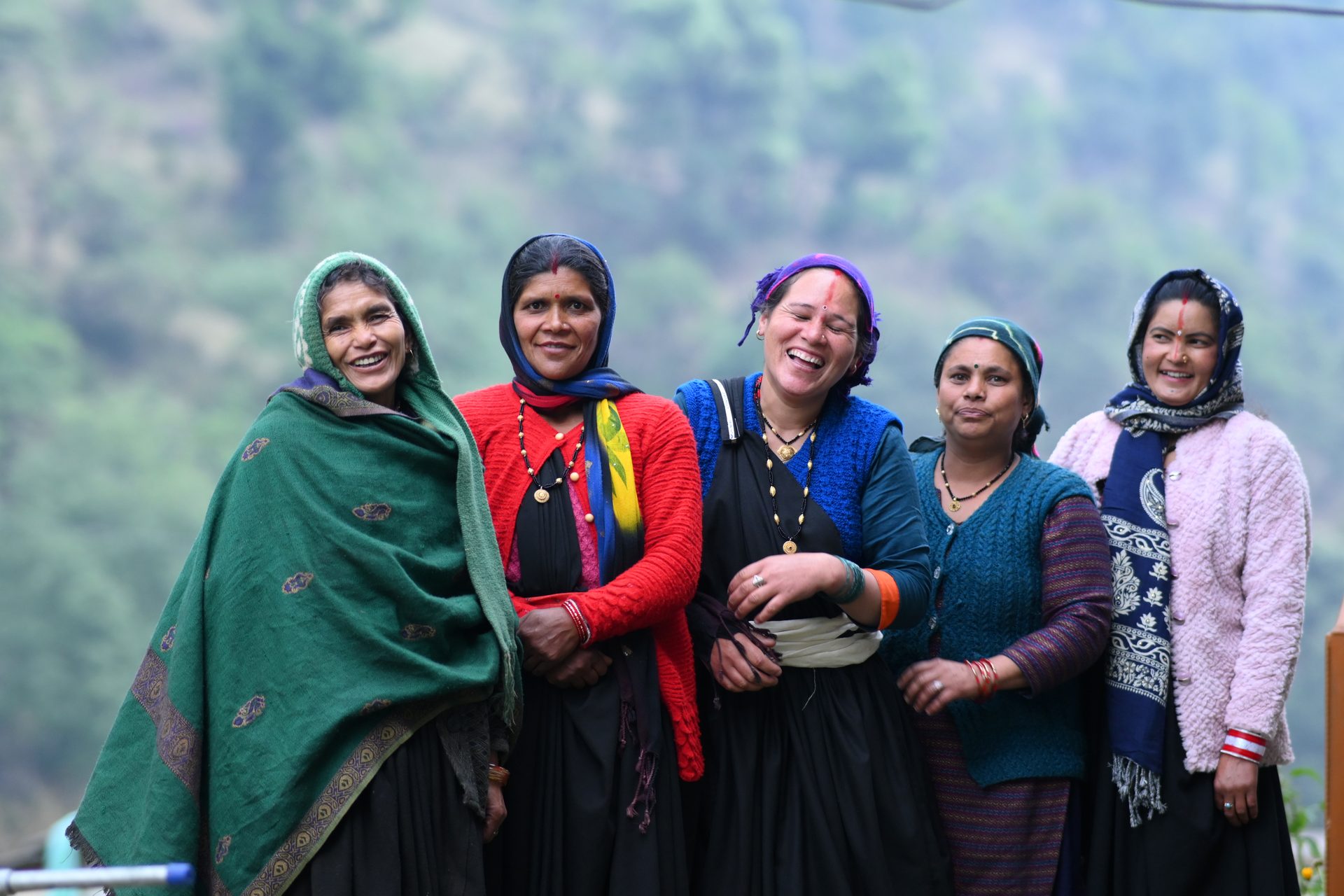
Our sourcing runs through women-led Self-Help Groups across more than 50 villages of Kumaon and Garhwal. Groups gather, grade and pack what their families grow and collect, and payments are settled directly to producers at agreed prices.
For a buyer that means one accountable partner in Dehradun instead of a chain of unnamed middlemen. For a village it means regular orders and a fair price. We say "women-led" because it describes how the groups are run, not because it is a slogan.
What the mountain gives, when it gives it.
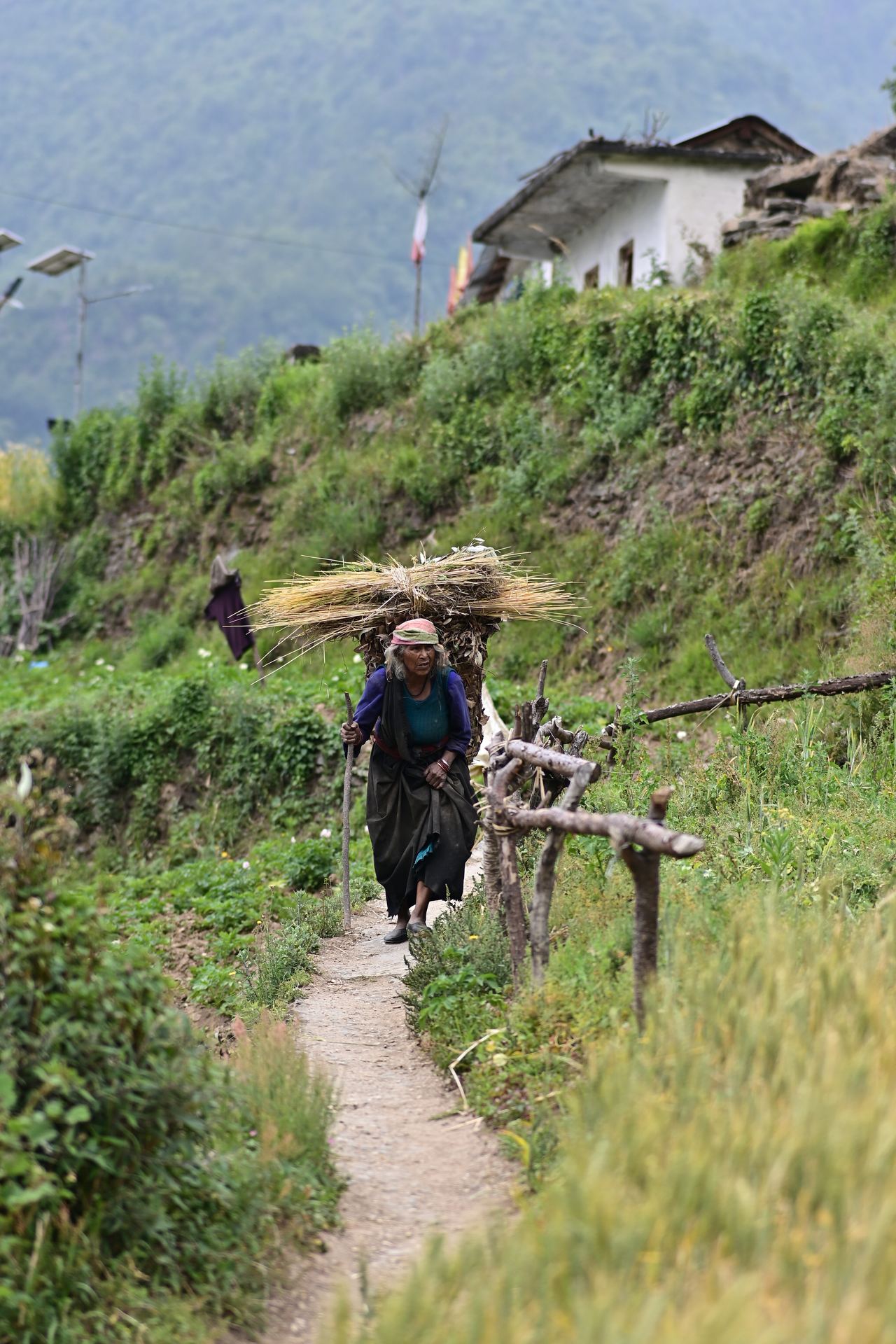
Some of our range cannot be farmed on a schedule. Sea buckthorn berries, stinging nettle leaves, Gucchi morel and mountain herbs are gathered by hand in their own season, from high villages such as those around Munsiyari and Pithoragarh. When the season is short, the quantity is short, and we tell buyers so early.
That honesty is part of the product. A buyer who plans around the harvest calendar gets better fruit, leaf and mushroom than one who expects the mountain to follow a purchase order.
Himalayan herbs and teas Sea buckthorn berries Gucchi morel Nettle leaves
The terraces and the old grains.
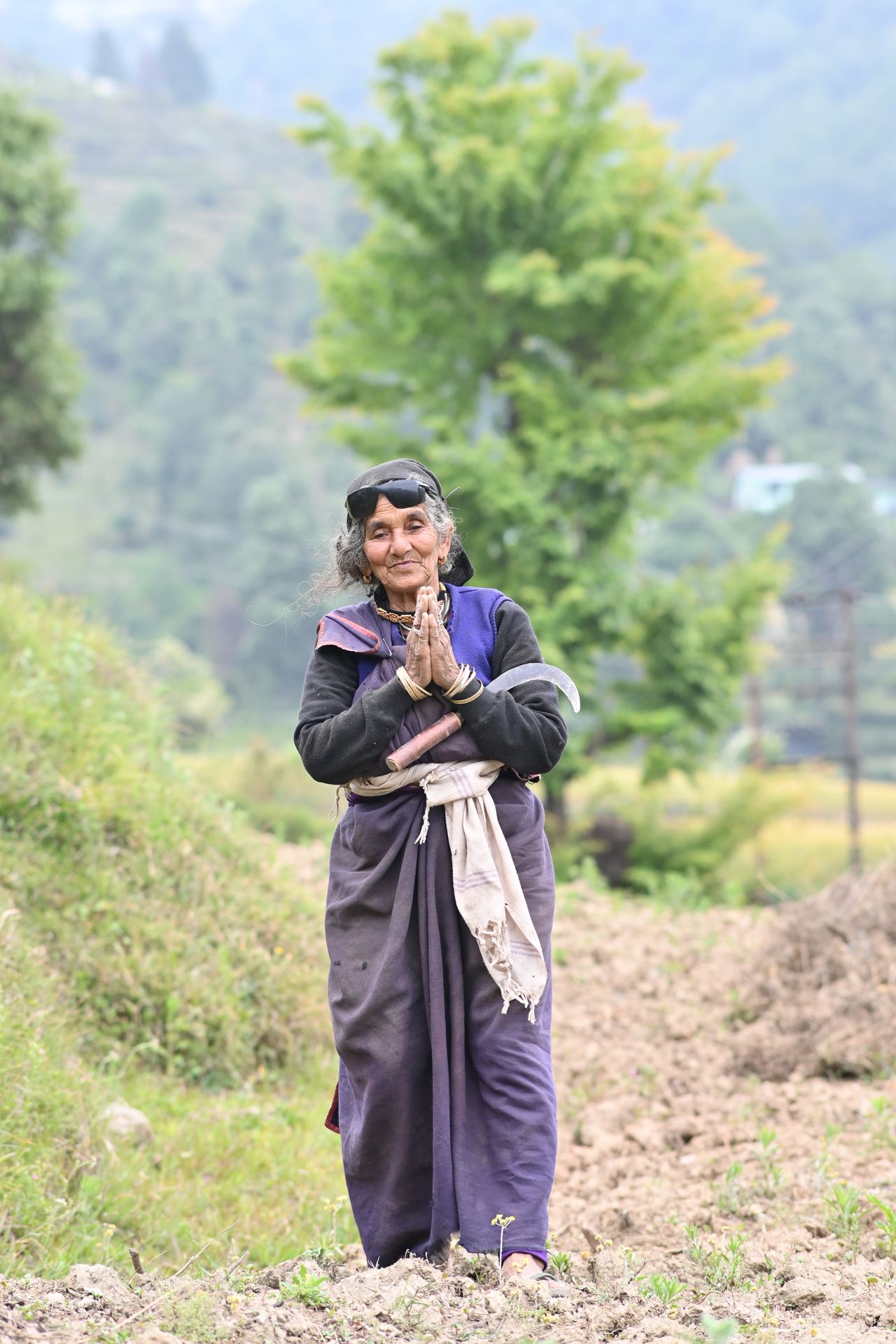
On the terraced fields around Chakrata and Almora the old mountain grains still grow: mandwa (finger millet), jhangora (barnyard millet) and ramdana (amaranth). They were the everyday food of the hills long before they became a trend elsewhere.
We supply them to wholesale and private-label buyers who want a grain with a real place of origin and a story that holds up when a customer asks about it.
Want these products in your market?
Tell us your product, quantity and destination. We reply within one business day with a written quotation.