Aipan is one of the craft traditions a visitor to Kumaon is most likely to remember. It is a ritual folk art, drawn at home on floors and walls, and it is now also made on cloth, paper and wood. This guide explains how it is made and what to look for. Our own page on Aipan art covers the products.
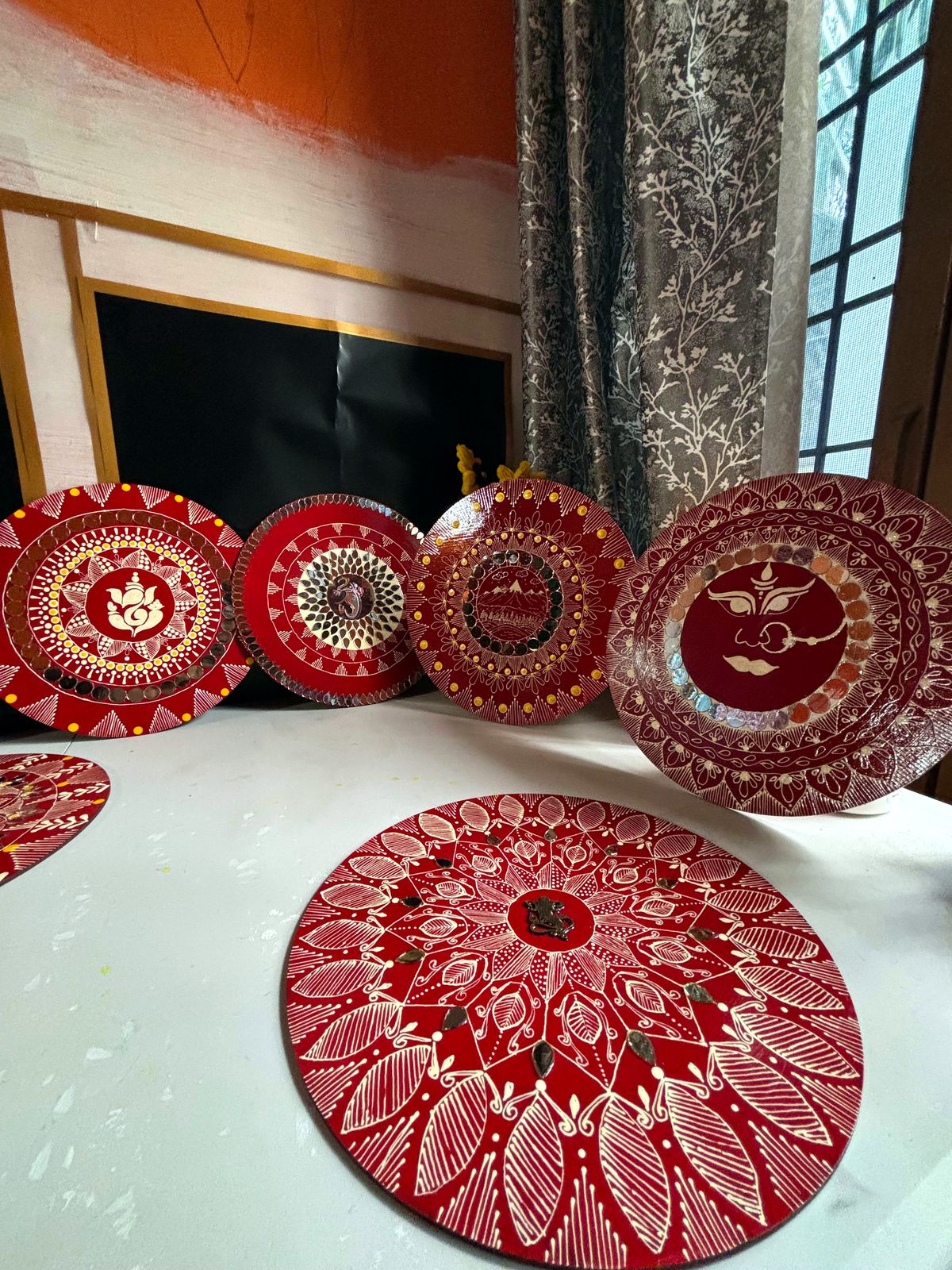
What Aipan is
Aipan is a ritual art of the Kumaon region of Uttarakhand, traditionally painted on floors and walls by women. A published craft profile describes the following:
- Materials. A red base of wet earth called geru, with the designs drawn in a white paste of ground rice and water. Historically a cow-dung wash was applied first. Today some people use red and white acrylic or enamel paints.
- Tools. A brush, sometimes a homemade one of bamboo wrapped in cotton, or the fingertips. Traditionally the last three fingers are used.
- Occasions. Celebrations, festivals, household ceremonies and also funeral rites. It is believed to protect the household. Particular designs, called chowkis, are drawn for particular purposes, such as a child's first formal schooling or the worship of goddesses.
- Motifs. Every design starts and ends with a central dot and radiates outward. Two overlapping triangles form a six-pointed star, and lines frame the composition on four sides. Flowers, geometric shapes, conch shells, kalash urns and footprints of goddesses are common.
Geographical Indication
Aipan appears in a list of Uttarakhand products registered as Geographical Indications in a 2022 report by Drishti IAS about the North India GI Festival. A registered Geographical Indication protects the name of a product linked to a place. Buyers who rely on the status for a label or listing should check the register entry directly. The Indian GI registry is at ipindia.gov.in.
What a workshop offers
Our agro-tourism programme includes an Aipan Art Immersion, a half-day or full-day workshop with practising artists. It is a hands-on session where participants learn motifs and technique. Timing, materials and number of participants are confirmed when you enquire. Ask your teacher what each motif means and when it would be used. The meaning is part of the craft.
Buying Aipan well
- Ask who made the piece, and whether the artist is paid directly.
- Ask what materials were used, and whether the paint is traditional or acrylic.
- Ask for the maker's name on the invoice if you plan to resell.
- Check any GI claim against the register before you print it.
- Be wary of a mass-printed design sold as hand-painted.
Visiting in context
An Aipan session works best as part of a village visit, where you can see the art on the walls of a house before you try it yourself. Combine it with a farm walk, as described in our planning guide, and read the responsible visit notes.
Frequently Asked Questions
What is Aipan made of?
Traditionally a red base of earth called geru, with designs in a white paste of ground rice and water.
Who traditionally makes Aipan?
Women, in Kumaon households, for festivals, ceremonies and rites.
Is Aipan a Geographical Indication?
It appears in a 2022 list of Uttarakhand products registered as GIs. Check the registry for the entry that matters to you.
Can beginners join a workshop?
Yes. Our Aipan Art Immersion is hands-on and led by practising artists. Details are confirmed per enquiry.
Last updated: 18 October 2026.
Sources: Itokri, "Explore the folk heritage of traditional Aipan art of Uttarakhand"; Drishti IAS, "Uttarakhand ranks first in North India Geographical Indication", 25 October 2022; Himalayan Region agro-tourism page.