Canadian visitors, from families reconnecting with India to small-group travellers and importers, can plan a village stay in the Uttarakhand hills with some preparation. This guide points you to the official sources first and then explains how our programmes work.
The India e-Tourist Visa
The official Indian e-Visa page lists Canada among the countries whose citizens can apply, and carries a separate advisory for Canadian nationals. We have not summarised that advisory, so read it in full on the page before you apply. Other points from the page:
- Tourism-type travel is covered. You need a return or onward ticket and enough funds.
- The passport must be valid for at least six months at application and have at least two blank pages.
- Options include a 30-day multiple-entry visa, one-year and five-year multiple-entry visas (maximum stay 180 days in a calendar year) and a six-month e-T2.
- Apply at least four days before arrival, up to 120 days ahead, and carry the "GRANTED" authorisation.
- The e-Visa is not valid for protected, restricted or cantonment areas without prior permission.
Use only the official portal, https://indianvisaonline.gov.in. Read the Government of Canada's travel advice for India before you book, and speak to a travel-health clinic. We do not process visas or give immigration advice.
What a stay involves
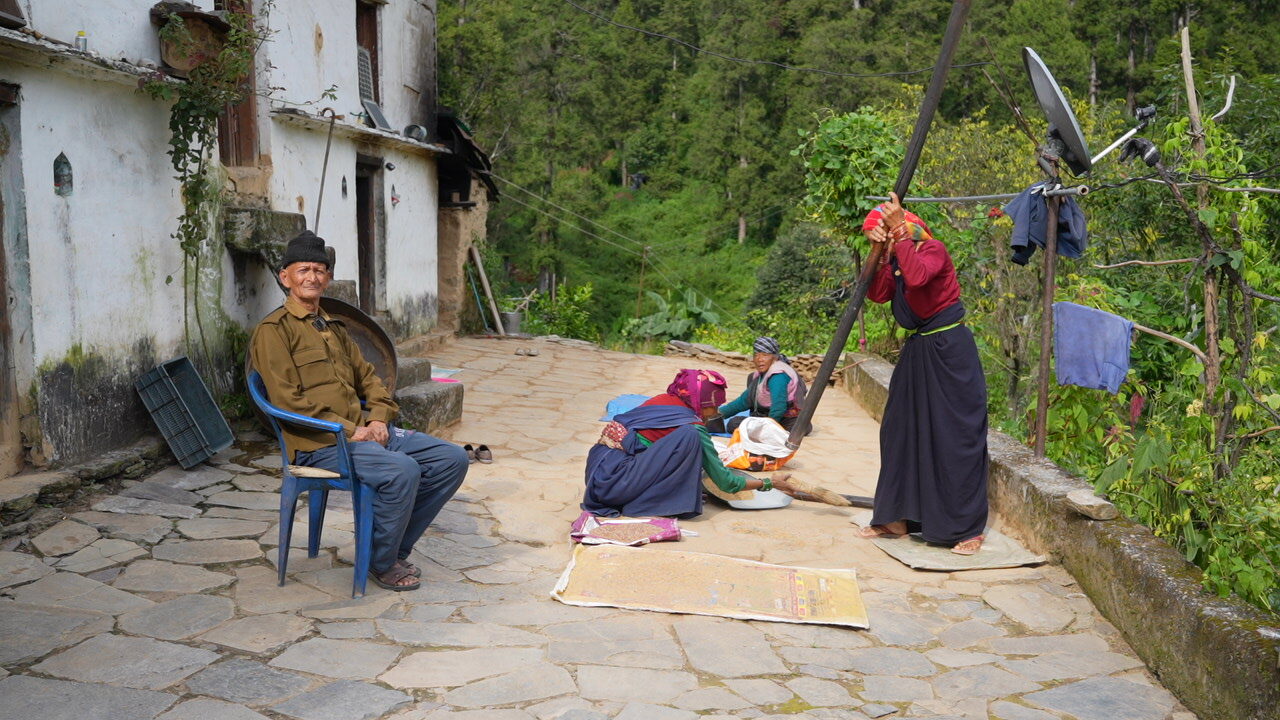
Our agro-tourism page describes day visits, multi-night homestay circuits, an Aipan art workshop, group retreats and buyer tours across Kumaon and Garhwal. Itineraries begin in Dehradun, with mountain transfers arranged on our side. The programme depends on season, host availability and road conditions and is confirmed in writing before travel. Pricing is on request. Flights, insurance and personal purchases are quoted separately unless stated.
If your family has roots in the hills, tell us. A village stay can include a visit to a particular area where hosts are available, and we confirm what is possible per enquiry. Read the planning guide and visiting a village responsibly.
Season
Our guidance is March to June and September to November for comfortable walking, with monsoon and winter routes depending on district, altitude and road access. See the harvest calendar.
For importers
A buyer familiarisation tour lets importers and retailers see our Self-Help Group facilities and packing units before ordering. See our guides to sea buckthorn, Gucchi morel and Himalayan grains. Canadian import and labelling rules are set by Canadian authorities. Confirm them with your import adviser, because we give no regulatory guidance here.
Next steps
- Decide dates and group size.
- Send an enquiry via the agro-tourism page or contact form.
- Review the written itinerary.
- Apply for the visa once dates are fixed.
Frequently Asked Questions
Can Canadian citizens apply for the Indian e-Visa?
The official page lists Canada among eligible countries and carries an advisory for Canadian nationals. Read the page in full.
How early should I apply?
At least four days before arrival, and up to 120 days ahead.
Do tours start in Dehradun?
Yes, with managed transfers to partner villages.
Can we visit a family's home village?
Tell us the area when you enquire. We confirm what is possible.
Last updated: 18 October 2026.
Sources: Government of India, Indian Visa Online, e-Tourist Visa, read on 18 October 2026; Government of Canada, Travel advice and advisories for India; Himalayan Region agro-tourism page. General information, not immigration or legal advice.