A field in the Himalayan foothills rewards slow looking. This guide uses photographs from a hill village in Uttarakhand to show what a visitor may see, with notes from published sources. What you see on your own visit depends on the month, the altitude and the farmer.
Amaranth (Ramdana)
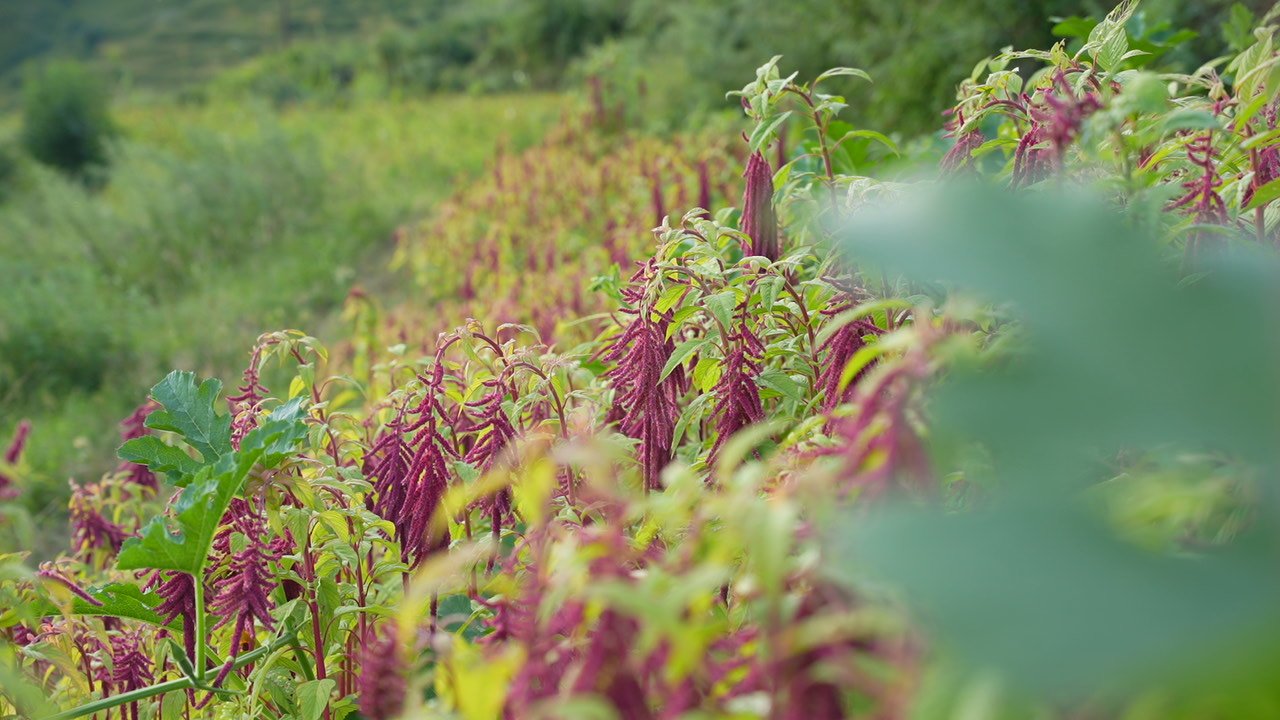
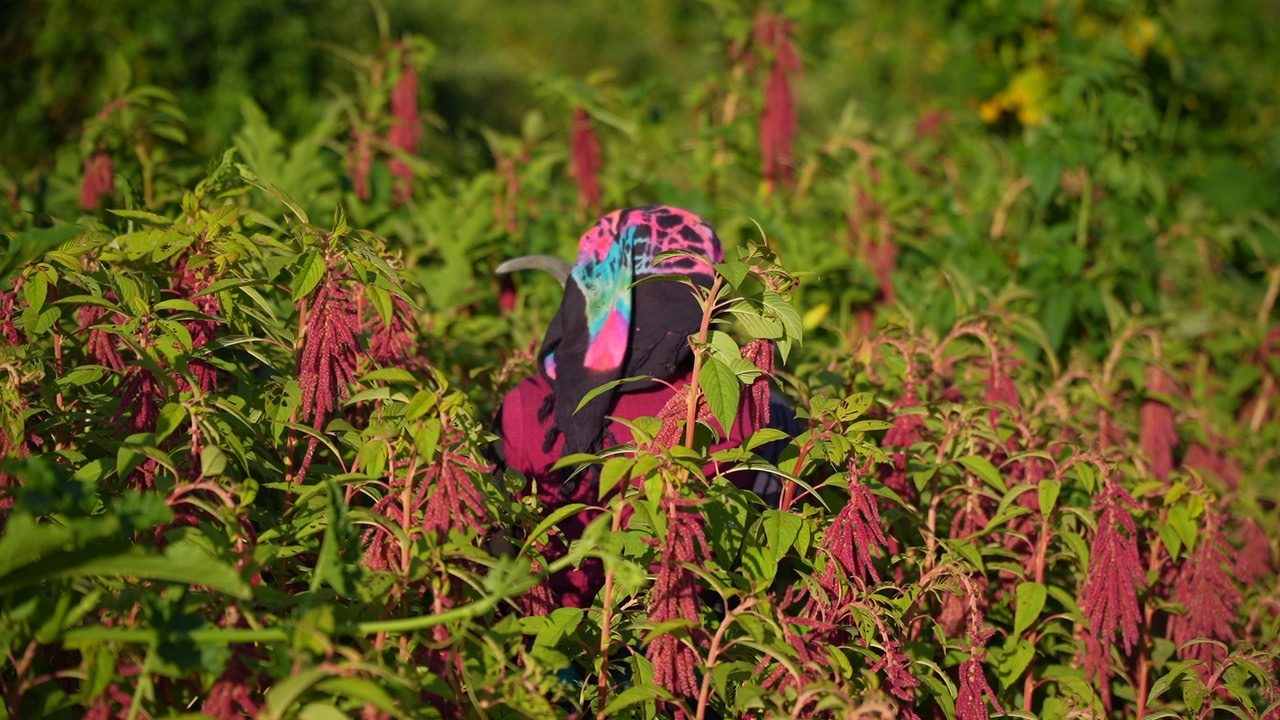
Amaranth grows as tall plants with drooping, brush-like flower heads, often deep red or crimson. According to a general reference summary, it is a pseudocereal from a different plant family than the true cereals, and its grain is relatively high in the amino acid lysine. It must be cooked before eating, and popped amaranth is a common ingredient in cereals and bars. See amaranth grain. In Uttarakhand it is known as Ramdana, and it is one of the crops listed in the traditional Barahnaja mixed-cropping system.
Millet seed heads
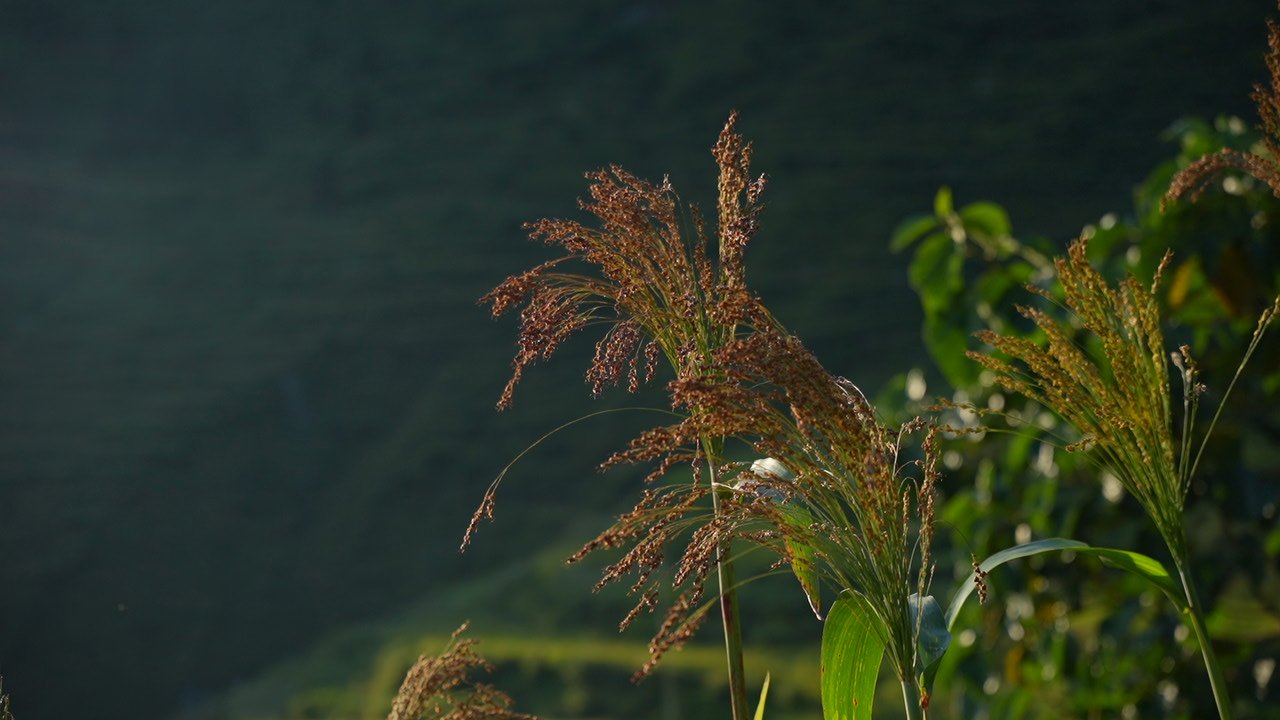
Millet in flower or seed shows as feathery, rust-brown clusters on tall stems. In the evening light the heads can look almost red. The three crops we list, Mandwa, Jhangora and Ramdana, are different plants with different uses. Finger millet (Mandwa) is a grass grown at roughly 500 to 2,400 metres in the Himalayan foothills, according to the reference summary, and barnyard millet (Jhangora) is grown on marginal land and cooked like rice.
A grain crop above the village
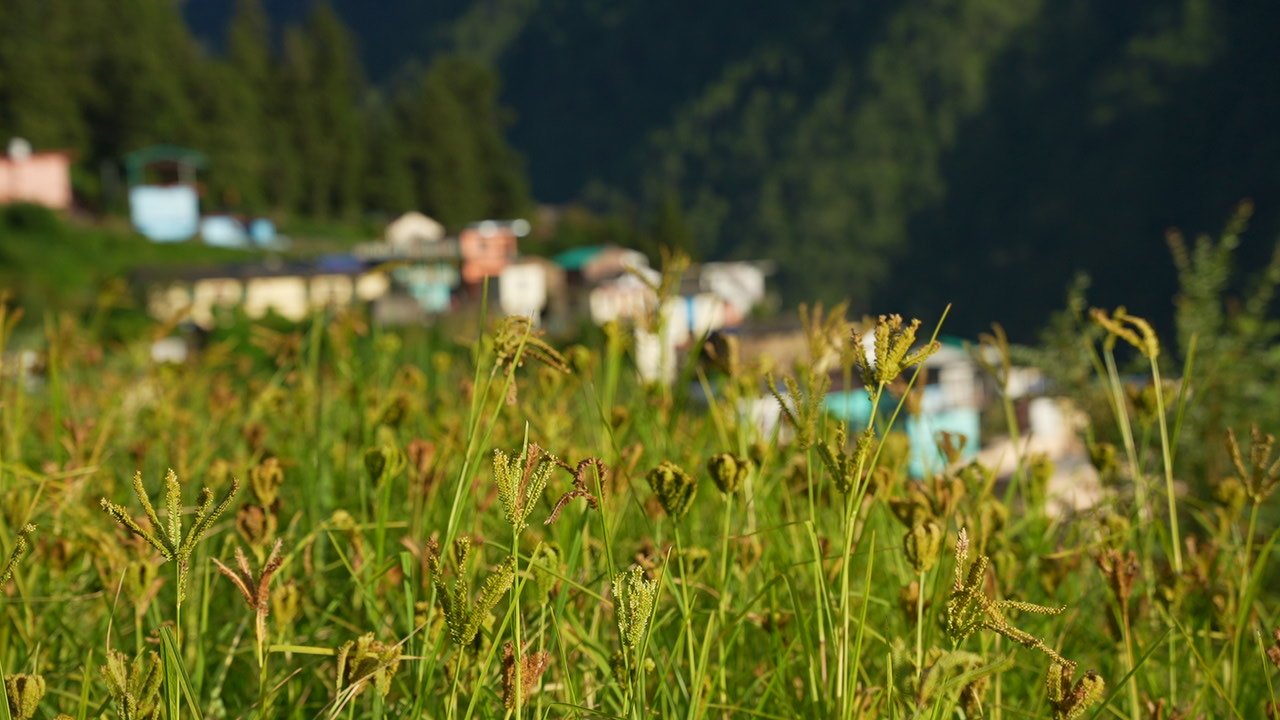
Fields often sit directly above the houses. In this view, the grain crop in the foreground is in focus and the village of small, coloured houses behind it is soft.
An unidentified plant
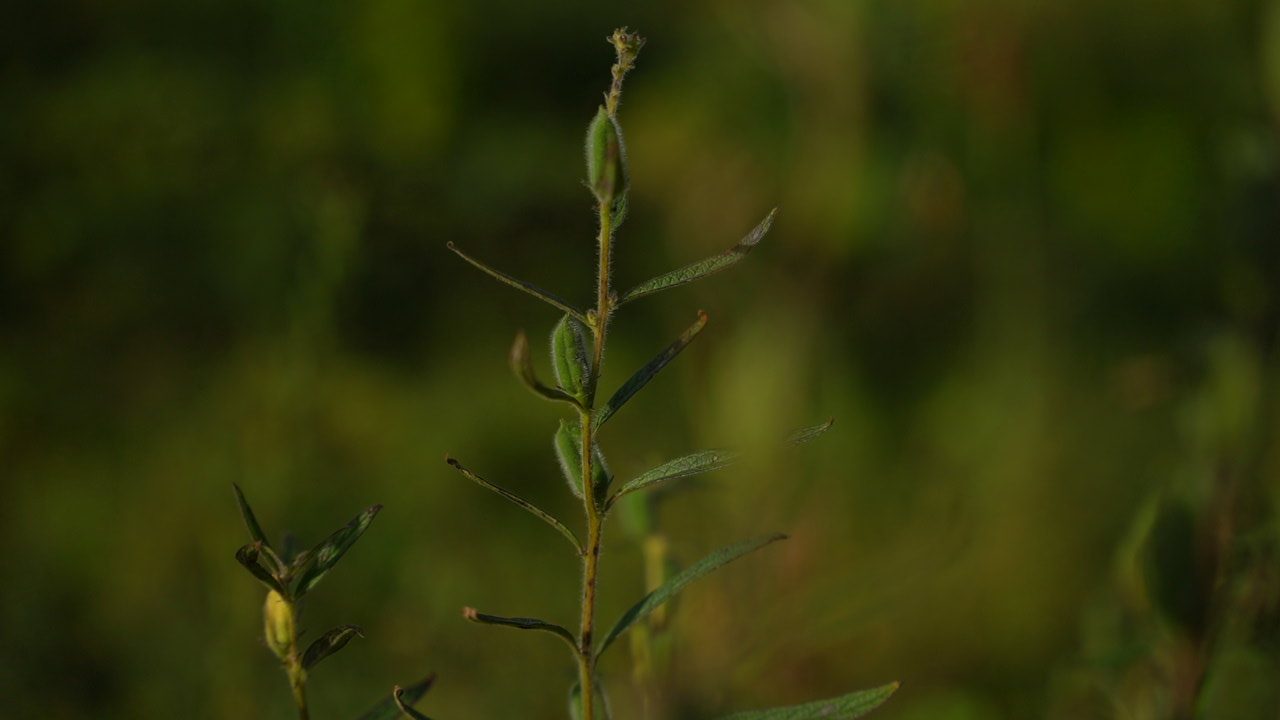
One photograph shows a slender, hairy-stemmed plant with small green pods along its stem, against a soft green background. We have not identified this plant, and we would rather say so than guess. If you visit, ask your host what it is and what it is used for.
How to look
- Ask what is growing, and why. Farmers can tell you which crops share a field and when each is harvested.
- Look at the mix. Several crops in one terrace are common in hill farming.
- Respect the crop. Do not walk through standing crops. Stay on the paths your host shows you.
- Ask before photographing people at work. See visiting a village responsibly.
To see a hill farm in person, start with our agro-tourism page.
Frequently Asked Questions
What does amaranth look like?
Tall plants with drooping, brush-like flower heads, often crimson. See the photographs above.
Is amaranth a millet?
No. It is a pseudocereal from a different plant family, but it is used in similar ways.
When can I see these crops?
It depends on the crop and the altitude. Many hill crops are harvested in autumn. Ask your host for your dates.
What is the plant with green pods?
We do not know. Our photograph shows an unidentified plant. A host or local farmer can tell you.
Last updated: 18 October 2026.
Sources: general reference summaries on amaranth grain, finger millet and Indian barnyard millet. Photographs by Himalayan Region.