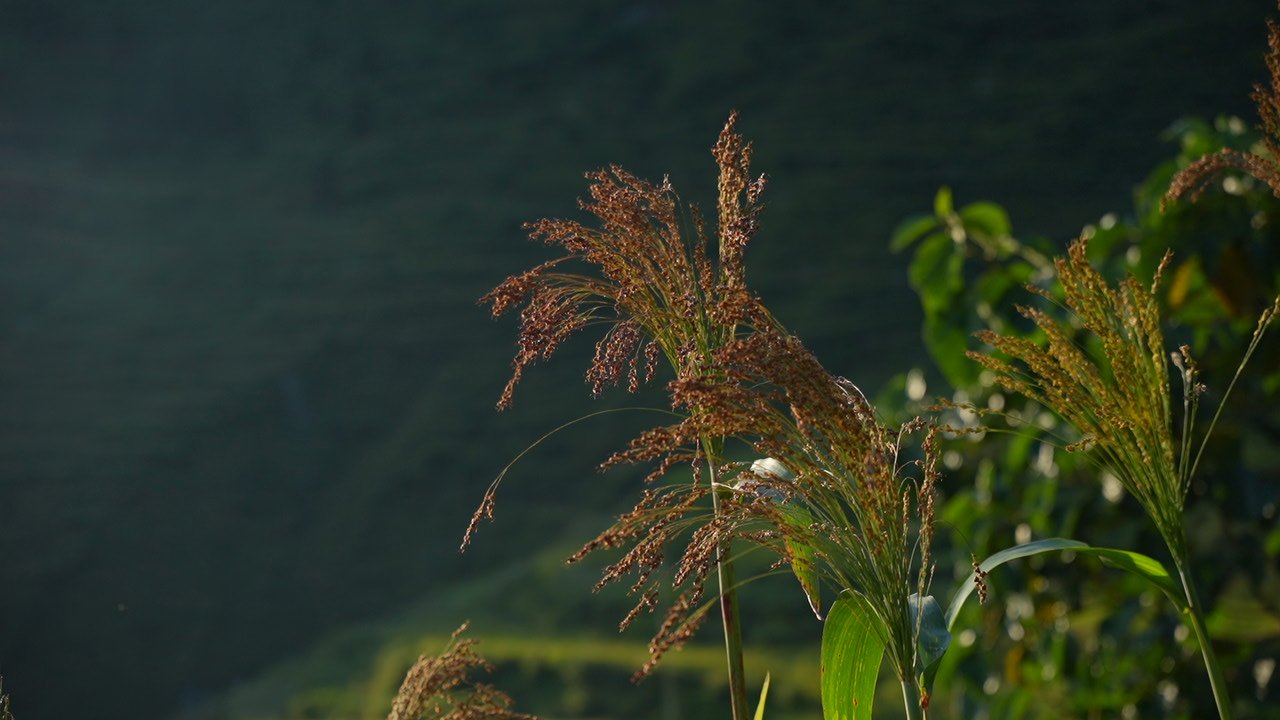
A visitor walking through a hill field in Garhwal may notice that it does not look like a single-crop farm. Millet, beans, buckwheat and herbs can be growing together in the same terrace. This is the logic behind Barahnaja, a traditional mixed-cropping system of Uttarakhand. This article explains what it is and what to look for if you visit a village at the right time.
What Barahnaja is
The name comes from Garhwali and means "twelve seeds". It refers to growing about twelve crops together in one field. According to the general reference summary, the system is meant to improve soil fertility, food security and ecological balance, and it is described as using no pesticides or fertilisers. The number of crops varies with terrain and climate, and a farmer may grow as many as twenty in a single field.
The twelve crops
The same reference lists these as the main crops:
| Local name | What it is |
|---|---|
| Mandua | Finger millet (ragi) |
| Ramdana | Amaranth |
| Rajma | Kidney bean |
| Ogal | Buckwheat |
| Urad | Black gram |
| Moong | Green gram |
| Gahat / Kulath | Horse gram |
| Bhat | Soybean |
| Lobiya | Cowpea |
| Kheera / Kakdi | Cucumber |
| Bhangjeera | Hemp |
| Jakhiya | Cleome |
Several of these crops are in our catalogue. See our guide to Mandwa, Jhangora and Ramdana for the grains.
Why farmers use it
The reference summary gives these reasons for the system:
- Lower risk. Many crops grown together mean that a failure in one does not wipe out the harvest.
- Soil protection. The system is described as suited to ecologically fragile slopes and as helping to prevent soil erosion.
- Food security. A household has grain, pulses and vegetables from the same plot.
- Climate resilience. It is described as resilient to climate variation.
These are claims from a general reference, not from a field trial we ran. If you want to know how a particular farmer's plots perform, ask the farmer.
What to look for on a farm walk
- Different leaf shapes in one terrace. Cereals and pulses grow side by side with different heights and habits.
- Timing. What you see depends on the month. Ask your host which crops are sown, flowering or being harvested during your visit.
- Seed saving. Many hill households keep their own seed. Ask how and why.
- Where the harvest goes. Some is kept for the household, some for sale. Ask your host to explain.
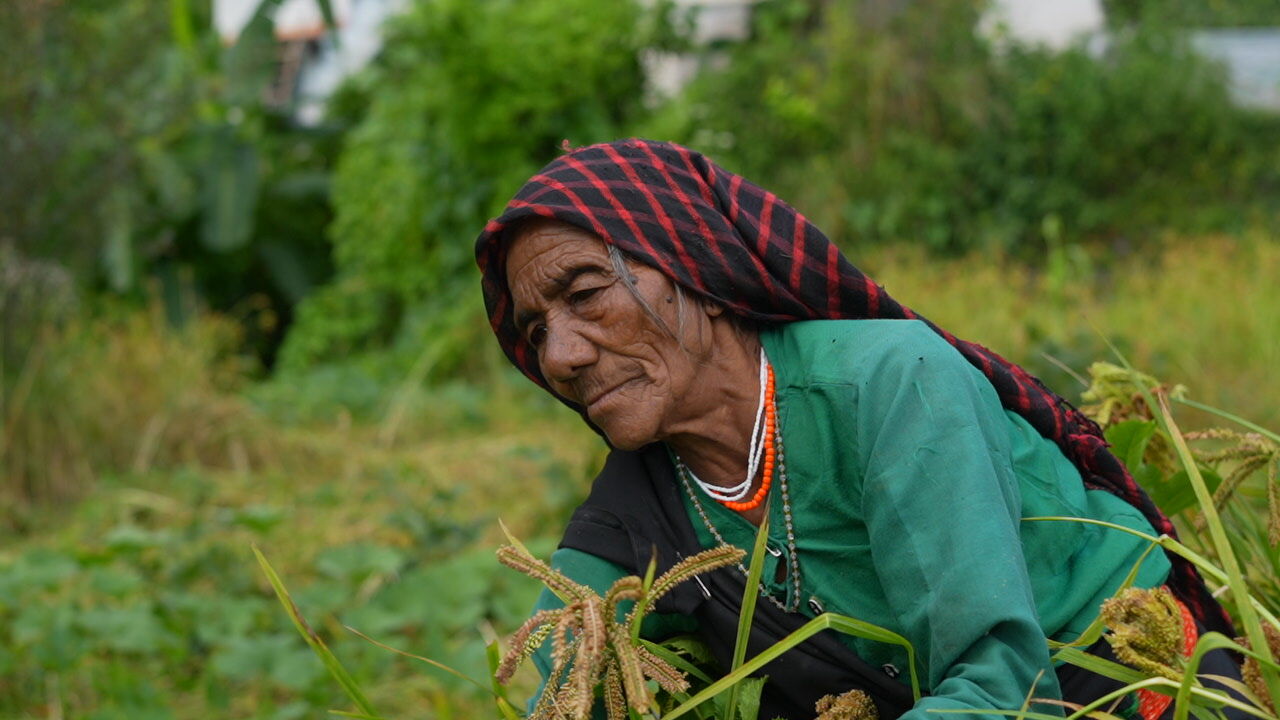
- Preparation. Barahnaja crops end up in village kitchens as flatbreads, porridges, dals and chutneys. A meal is often the best way to see the system.
A note on the word "organic"
The reference describes Barahnaja as using no pesticides or fertilisers. That is not the same as certified organic produce. Certification requires documents and inspections. When you buy any Himalayan product, ask for the certificate if an organic claim matters to your market. Our own product listings state what is and is not certified.
Visiting a Barahnaja village
Our agro-tourism page describes the village experiences we plan in Kumaon and Garhwal, including terrace walks and seasonal farm participation. We confirm the crops you are likely to see for your dates in the written itinerary, rather than promising a particular field in advance.
Frequently Asked Questions
What does Barahnaja mean?
"Twelve seeds" in Garhwali, referring to the twelve main crops grown together.
Do farmers always grow exactly twelve crops?
No. The number varies with terrain and climate, and some farmers grow as many as twenty in a field.
Is Barahnaja produce organic?
It is described as grown without pesticides or fertilisers, but that is not a certification. Ask for documents if your market requires them.
When is the best time to see it?
It depends on which crop you want to see. Many hill crops are harvested in autumn. Confirm timing with your host for your dates.
Can I buy these crops in bulk?
Several appear in our catalogue, including Mandwa, Jhangora, Ramdana and Rajma. See the catalogue.
Last updated: 18 October 2026.
Sources: general reference summary, "Barahnaja". The list of crops and the stated benefits are as given there.