Agro-tourism means travelling to a working farm or farming village and taking part in, or at least seeing closely, the agricultural year. In the Himalaya that usually means terraced fields on steep slopes, small family holdings, mixed crops, wild harvests from the forest edge and craft traditions that grew up alongside farming. This guide explains what to expect and how to plan a visit. It also places our own programmes, which are in Uttarakhand, within the wider mountain range.
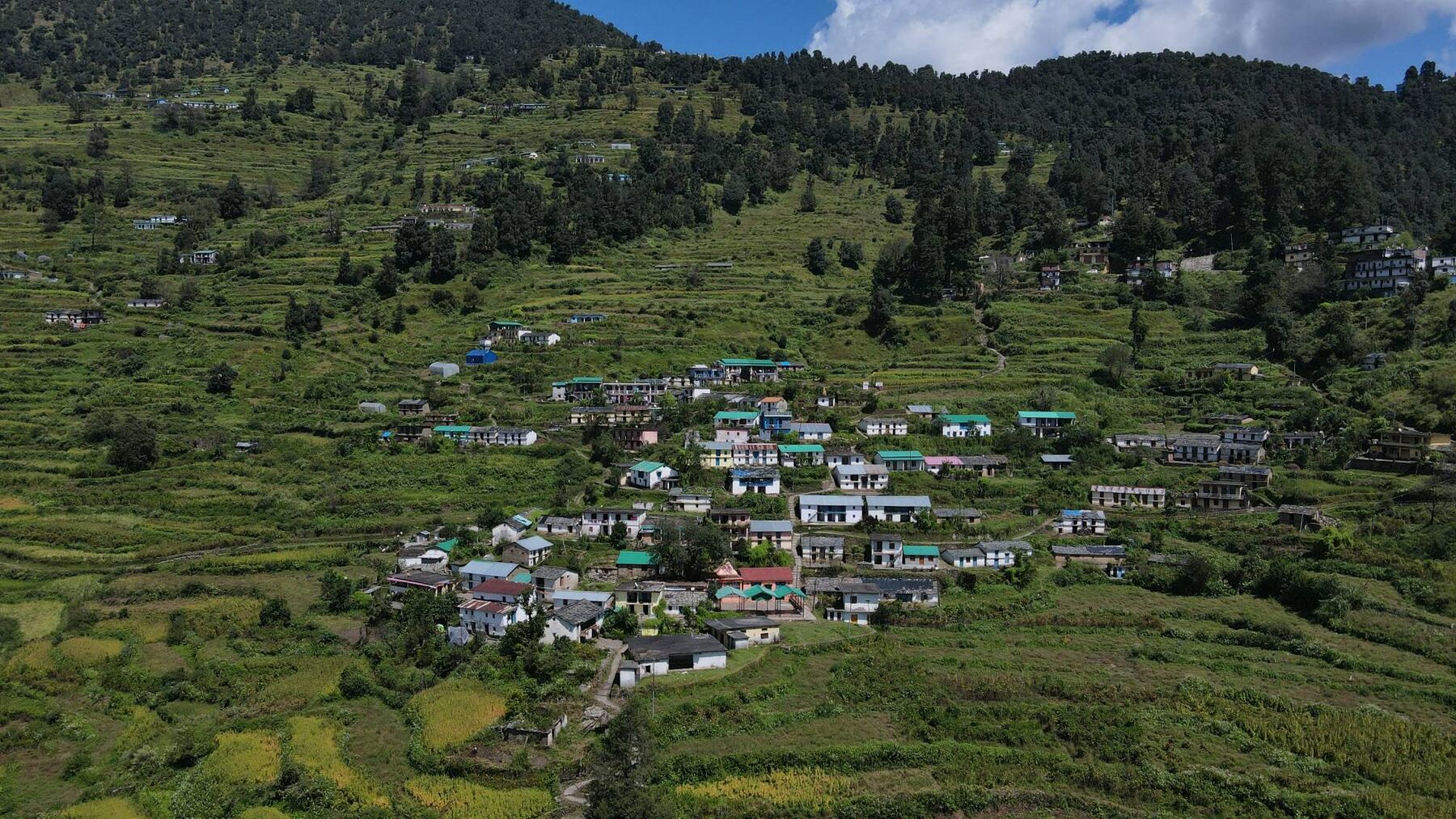
What a village farm visit usually includes
Himalayan Region plans village programmes in the Kumaon and Garhwal hills of Uttarakhand. Our agro-tourism page lists the formats we offer, from a day in a village to multi-night homestay circuits, an Aipan art workshop, retreats and buyer visits. Typical building blocks are:
- A guided walk through terraced fields with a local host.
- Seasonal farm work, led by the host and matched to what is actually happening in the fields that week.
- Meals cooked in a village kitchen from local grain, pulses and vegetables.
- A visit to a Self-Help Group production unit.
- A craft session, such as Aipan.
Exact inclusions depend on the season, the host's availability and road conditions, and are confirmed in writing before travel.
When to go
Our own planning guidance is that March to June and September to November generally offer comfortable walking conditions in Uttarakhand, while monsoon and winter routes depend on the district, altitude and current road access. Farm activity follows the calendar too. Read our harvest calendar for what sourced reports say is happening in different Himalayan regions at different times of year.
Questions to settle with any host or operator
- Who hosts you? Ask whether the family you stay with receives the fee directly.
- What exactly is included? Transfers, meals, guide, workshop materials and insurance are separate lines. Ask for them in writing.
- How big is the group? Small groups suit narrow village lanes and small kitchens.
- What are the access conditions? Mountain roads close for weather. Ask what the alternative plan is.
- What are the house rules? Photography, water use, waste and dress. See visiting a village responsibly.
- What are your needs? Mobility, diet and medical requirements should be raised at planning time, not on arrival.
Where our programmes sit in the wider Himalaya
The Himalaya runs across several countries and Indian states, each with a different farming landscape. Sikkim has a state-wide organic policy and cardamom agroforestry. Kashmir has saffron fields, Ladakh has apricots and Himachal Pradesh has a natural-farming programme. Our programmes are in Uttarakhand only. For the other regions we have written background guides from published sources, so a traveller can understand what they are looking at. They are not tour offers, and you should check any local operator's credentials yourself. Start with the wider Himalayan farm trail and Sikkim's organic story.
How to start an enquiry
Send your group size, dates and interests through the agro-tourism page or the contact form. We reply with a proposal. Pricing is on request, and nothing is fixed until you have the written itinerary.
Frequently Asked Questions
What is agro-tourism?
Travel built around farming: staying on or near a working farm, seeing or joining seasonal work, and eating what the land produces. In the Himalaya it is closely tied to village homestays and local crafts.
Do I have to do farm work?
No. Farm tasks are led by the host and matched to the season. Guests can watch, join in for part of the day, or choose a walk and a meal.
Is it suitable for families or older travellers?
Routes can be adapted for families, small private groups and teams. Hill paths can be steep, so mobility needs should be discussed at planning time.
Does the fee reach the village?
Our programmes are built so that hosting fees go to the village families who host. Ask any operator the same question, and ask how the fee is split.
Can a business buyer visit the source?
Yes. Our buyer familiarisation tours let importers, retailers and distributors see Self-Help Group facilities and packing units before placing an order.
Last updated: 18 October 2026.
Sources: Himalayan Region agro-tourism page for programme formats, seasonal guidance and planning notes. Regional background is drawn from the sources listed in the linked guides.